
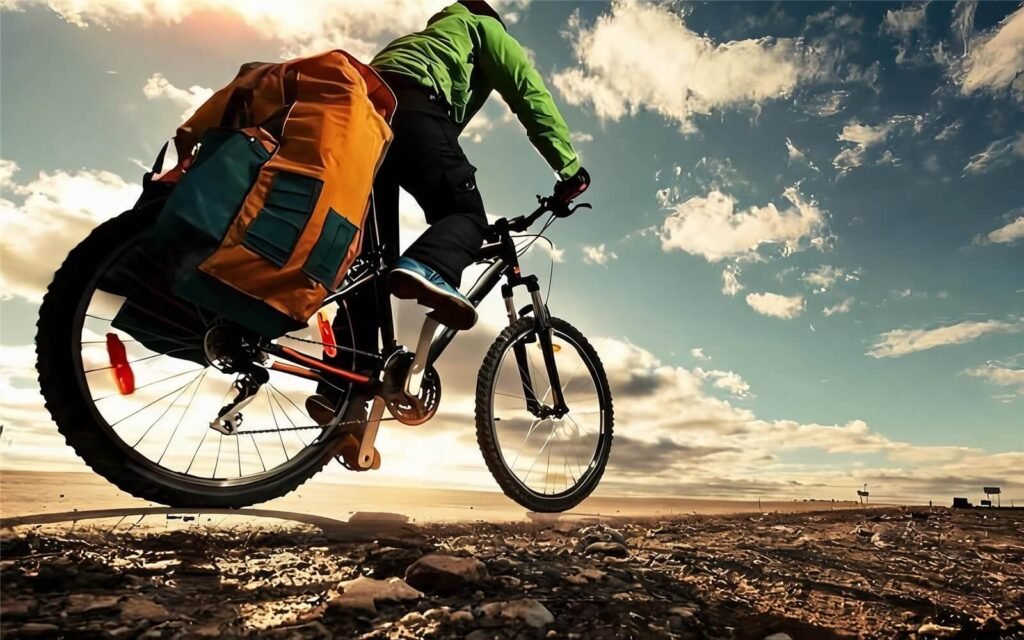
Meta Title: How to Choose Waterproof Panniers for Bicycle Touring | 12-Year OEM Factory Guide
Meta Description: Planning a long-distance bike tour? Learn how to select waterproof touring panniers. Based on 12 years of OEM factory testing, we cover fabrics, capacity, mounting systems & OEM customization for cycling brand buyers.
Tags: waterproof bike panniers, long-distance cycle touring gear, custom cycling luggage OEM
Introduction
Some cyclists enjoy multi-day trips, while others pursue round-the-world bicycle touring. On the road, waterproof panniers serve as a mobile home. Many riders travel over gravel roads, mountain switchbacks, and face persistent heavy rainfall. Poor pannier selection easily leads to soaked gear, fabric abrasion, loose mounting hardware, and can ruin an entire journey.
Most buyers struggle to distinguish water-repellent panniers from professional fully waterproof touring panniers. They often overlook critical details such as mounting stability, storage layout and weight balance, which trigger numerous negative reviews. Many novice cyclists also struggle with a common question: should you choose two panniers or four for long-distance touring?
Founded in 2014, our factory specializes in OEM customization of cycling bags. We continuously collect feedback from global cycling brands and conduct outdoor durability testing. This guide outlines core selection criteria for waterproof panniers for bicycle touring, covering waterproof construction, material selection, capacity matching, storage design and mounting systems.
This guide works for both long-distance cyclists and brand buyers planning to develop touring luggage lines, helping you reduce after-sales issues including water ingress and structural damage.
1. Waterproof vs Water-Repellent Panniers: Key Distinction for Touring
Many new cyclists confuse water-repellent panniers with professional waterproof panniers, which is one of the most common mistakes when selecting touring gear.
1.1 Water-repellent panniers (Only for daily commuting & short fine-weather trips)
Manufactured with coated fabric and traditional stitched seams. They only resist light splashes and cannot withstand prolonged heavy rain. For multi-day tours, riders need extra dry bags to protect belongings.
1.2 Fully waterproof panniers (Standard for long-distance & round-the-world cycling)
Constructed with seamless heat-welded seams paired with roll-top closure. This eliminates pinhole leakage caused by stitching and delivers reliable protection during sustained downpours.
2. Durable Waterproof Fabrics for Touring Panniers
Different fabric grades directly determine service life, waterproof performance and product pricing. Below is a comparison of mainstream touring pannier materials:
| Material | Waterproof Performance | Abrasion Resistance | Weight | Best For |
|---|---|---|---|---|
| 500D/840D PVC Tarpaulin | Excellent (fully waterproof) | Excellent | Medium | Expedition & long-distance touring |
| TPU-Laminated Cordura Nylon | Excellent (fully waterproof) | Very Good | Light | Mid-to-premium lightweight touring lines |
| 600D Coated Oxford Fabric | Basic (water-repellent only) | Moderate | Light | Entry-level commuter & short-trip panniers |
2.1 PVC-coated tarpaulin (Mainstream fabric for expedition touring)
500D / 840D high-tensile PVC material. It offers excellent waterproof performance, abrasion resistance and UV stability, performing reliably on gravel roads and rugged terrain.
2.2 TPU-laminated Nylon / Cordura Fabric (Preferred for mid-to-high-end products)
Lightweight, flexible and scratch-resistant. Premium European brands including Ortlieb widely adopt laminated Cordura, balancing low weight and waterproof performance.
2.3 600D coated Oxford fabric (Entry-level option)
Lower production cost, yet only water-repellent. Not recommended for multi-day or round-the-world cycling.
All our fabric and hardware durability tests align with international quality standards from
ASTM International.
3. Select Suitable Capacity Based on Tour Type & Prioritize Weight Balance
Tested by experienced round-the-world cyclists: trip duration does not directly determine required capacity. Whether you carry camping gear, cook your own meals and local climate are the decisive factors. Credit card touring (travel without camping equipment) requires far less storage space than self-supported camping tours. Always reserve extra room for drinking water and supplies during the ride.
3.1 Day touring: 20–25L per pair
For lightweight loads and short leisure cycling trips.
3.2 Multi-day touring: 30–40L per pair (Most universal wholesale specification)
Widely accepted across the market. Store clothing and daily supplies in rear panniers; place heavy compact items such as tools, food and cookware in front panniers to achieve balanced weight distribution.
3.3 Round-the-world / expedition touring: 40–60L total capacity
Accommodates full camping gear for long-term wilderness cycling.
4. Storage Layout: Single Compartment vs External Pockets
A long-debated design topic among touring cyclists.
4.1 Single-compartment panniers
Pros: Simple construction, easy to clean, maximized internal storage, lower manufacturing cost.
Cons: Hard to locate small items quickly; riders need packing cubes or separate stuff sacks for organisation. Many dry-bag style waterproof panniers from Ortlieb and Crosso adopt this layout.
4.2 Panniers with quick-access external pockets
Pros: Snacks, repair tools, maps and other frequently used items are readily accessible during cycling, making them more beginner-friendly.
Cons: Additional seams create higher risk of water ingress and raise production costs.
5. Pannier Mounting Systems & Rack Compatibility
Continuous vibration on gravel roads causes bag shifting, rattling and hardware wear. The mounting structure directly determines long-term reliability. Many cyclists encounter a frustrating issue: pannier hooks fail to fit the tube diameter of their luggage racks. Prioritize adjustable hooks to allow rack replacement later. Plastic clips are prone to breaking in low temperatures; carry spare clips for long-distance travel.
5.1 Quick-release mounting system (QL design, top choice for touring)
Fast installation and removal with anti-rattle structure. Long-distance touring models should support replaceable clips to resolve hardware wear issues.
5.2 Adjustable hook mounting system (QMR design)
Fits 8–16mm round, square and oval rack tubes, delivering broad compatibility and preventing fitting issues when riders change racks.
5.3 Simple strap-on system
Low cost, suitable for entry-level commuter lines. More prone to shifting on bumpy roads and not recommended for expedition touring.
For a detailed breakdown of mounting structures, read our full guide on
different types of pannier bag mounting systems.
For step-by-step installation instructions, see our guide on
how to install rear rack pannier bags on a city bike.
6. Two Panniers or Four Panniers? Comparison of Touring Setups
One of the biggest dilemmas for new cyclists, summarised from real feedback from numerous long-distance riders:
6.1 Four panniers (Front + Rear) Pros & Cons
- Even weight distribution delivers stable bike handling and uniform tyre wear; separate storage for food and camping gear improves organisation
- Higher overall purchase cost; requires additional front lowrider racks
6.2 Two rear-only panniers Pros & Cons
- Lower budget; limited storage naturally discourages overpacking
- Weight concentrated on the rear wheel, worsening uphill handling
A widely accepted compromise among touring cyclists: two rear panniers plus a handlebar bag.
7. Essential Structural Features for Waterproof Touring Panniers
7.1 Roll-top closure
Blocks rainwater entering from the opening and allows compression to adjust load volume flexibly.
7.2 Seamless heat-welded seams
Eliminate stitching pinholes, the core guarantee of waterproof performance.
7.3 Reinforced corners & abrasion-resistant base
Constant vibration and friction against gravel roads wear down the base; reinforced construction extends service life.
7.4 Heel strike prevention design
Prevent panniers from rubbing against heels during pedalling — a frequently overlooked pain point for end users.
8. Common Mistakes When Buying Touring Waterproof Panniers (Factory QC Experience)
- Choosing stitched water-repellent panniers under the false assumption they withstand heavy rain on long tours
- Oversized panniers leading to tyre contact and heel strike
- Ignoring anti-rattle mounting structures, resulting in constant bag movement on rough roads
- Insufficient UV resistance causing premature fabric ageing during prolonged outdoor use
- Poor capacity layout leading to unbalanced weight and safety risks
- Neglecting rack compatibility, resulting in unfit products after purchase
9. Maintenance Tips to Extend Waterproof Pannier Lifespan
- Clear sand and mud after off-road rides to reduce fabric abrasion
- Fully air-dry bags before long-term storage
- Regularly inspect heat-welded seams and hook tightness
- Replace worn rubber hook pads to avoid rack scratches and rattling noise
- Carry spare mounting clips for international long-distance tours
10. OEM Customization Options for Waterproof Touring Panniers
- Custom waterproof rating: IPX4 / IPX5 / IPX6
- Custom capacity and dimensions to fit front lowrider racks and rear racks
- Choose roll-top closure or waterproof zipper opening
- Custom hardware, brand logos and fabric colours
- Add detachable shoulder straps for convenient carrying off the bike, ideal for cross-border travel
- Select single-compartment layout or external pocket design according to target market positioning
Explore our full product line of
custom waterproof touring panniers for wholesale OEM orders.
Conclusion
When selecting waterproof panniers for bicycle touring, prioritise heat-welded waterproof construction, durable fabrics, suitable capacity, storage layout and stable mounting systems. Fully waterproof panniers are essential for round-the-world and multi-day expedition cycling.
Cyclists should decide between a 2-pannier or 4-pannier setup based on trip length, camping plans and budget. Always confirm compatibility between panniers and your bicycle rack.
For brand wholesalers, optimised seam technology, flexible storage options and universal adjustable mounting hardware effectively lower after-sales rates and improve product market competitiveness.
Enquire About Customization: Contact us to get samples of waterproof touring panniers and discuss OEM luggage customization solutions. Our sample lead time is 3–7 working days, with full customization for logos, fabrics, sizes, and hardware.
Frequently Asked Questions
