
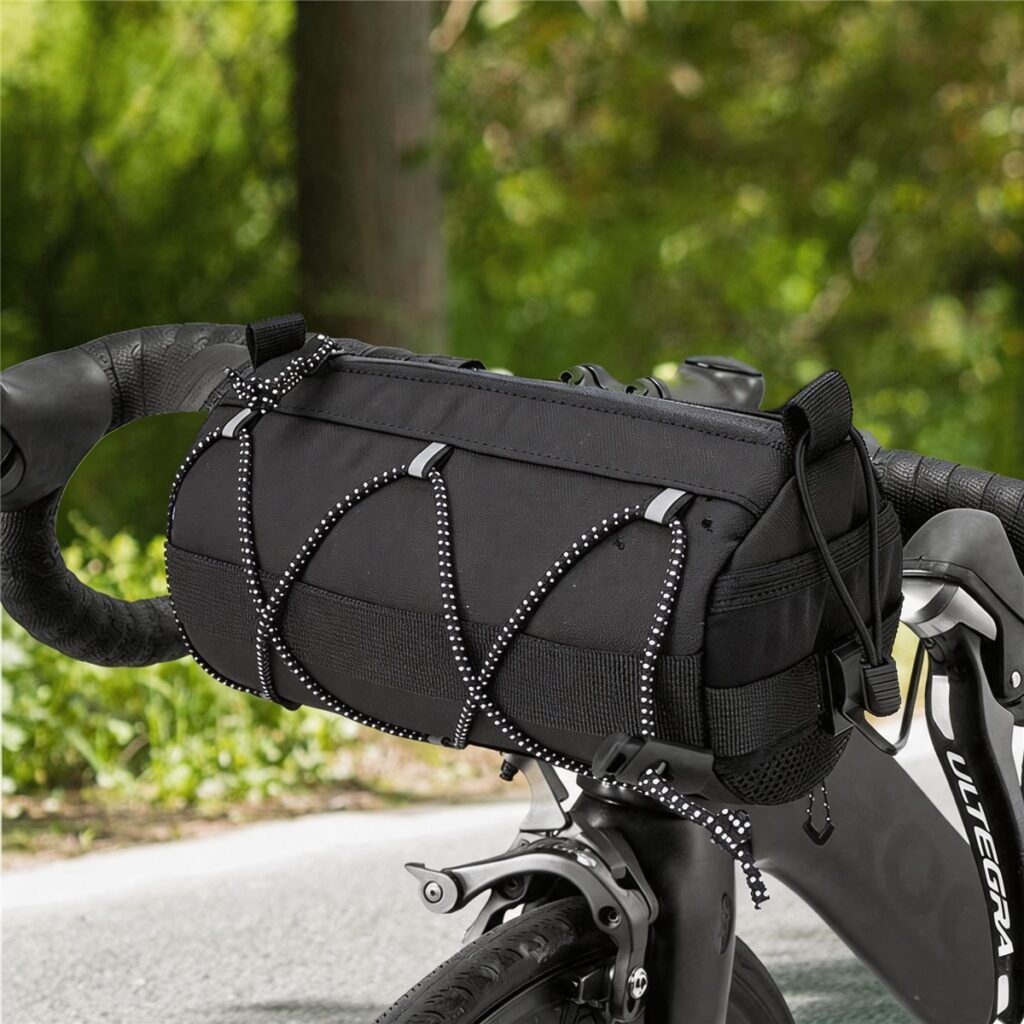
Meta Title: Best Weather-Resistant Materials for Custom Handlebar Bags | OEM Factory Guide
Meta Description: Wondering which fabrics deliver top-tier weather protection for bike handlebar bags? Our 12-year cycling bag OEM shares lab-tested fabric data to help brand buyers select proper textiles for wholesale bike bag orders.
Introduction
Our factory was established in 2014, with 12 years of experience custom-manufacturing all styles of bicycle handlebar bags for global commuter, mountain bike, gravel and long-distance bikepacking brands. We operate an independent in-house fabric testing lab; every batch of raw materials undergoes strict waterproof, UV fading and abrasion tests before mass production starts.
For brand owners and OEM purchasers, fabric selection directly shapes end-user experience, product star ratings and after-sales volume. Many new buyers only focus on upfront material costs while ignoring long-term weather resistance, which leads to numerous negative reviews about rain leakage, faded custom logos and rapid fabric wear.
Not all textiles can withstand rain, sunlight, dust and trail abrasion. In this guide, we break down lab-verified fabric performance data, real client case studies and tailored OEM suggestions, so you can pick suitable weatherproof fabrics for your private-label handlebar bag line.
1. Why Weather Protection Matters for OEM Handlebar Bag Designs
If you plan to launch a line of handlebar bags, weather durability should never be an afterthought — it is one of your core selling points that differentiate your brand from low-budget competitors. Based on thousands of past bulk orders, we’ve summarized four key reasons to prioritize weather-resistant fabrics:
- Water leakage ranks the No.1 cause of 1-star retail reviews for cycling bags. Light rain seeps through cheap uncoated textiles, damaging riders’ phones, keys and navigation devices and triggering mass returns.
- Prolonged UV exposure fades printed custom logos and dulls fabric colors. This creates huge troubles for brands that rely on consistent visual identity across product lines.
- Dust, mud and grit accelerate fabric abrasion. Mountain bikers and bikepacking enthusiasts frequently drag bags over rough terrain; poor abrasion resistance drastically shortens product service life.
- Strong all-weather durability builds brand loyalty. If your bags stay intact after seasons of outdoor riding, cyclists will repurchase and recommend your products to friends.
From our 12 years of production experience, I never recommend thin uncoated textiles for year-round outdoor cycling bags. They seem cost-effective at first glance, yet they will cost you far more on returned goods and damaged brand reputation in the long run.
2. Top 3 Weather-Resistant Fabrics for Custom Handlebar Bags (Factory Lab Ranking)
We test every fabric type in our lab and rank them by balanced weather performance, OEM cost and compatibility with cycling bag production. Below are our three most widely used options with verified technical data extracted from our material test documents.
2.1 900D Ripstop Polyester Oxford – Best All-Rounder for Mass OEM Orders
| Test Index | Standard Parameter |
|---|---|
| Water Pressure Resistance | 800 mm to 1,500 mm with PU or PVC coating |
| UV Resistance Rating | Moderate to Good; add UV-inhibitor coating for year-round outdoor use |
| Abrasion Cycles | 500 to 700+ Martindale cycles |
| Fabric Weight | 217 g/m² to 250 g/m² (6.4 to 7.3 oz/yd²) |
Best application scenarios: Daily commute bike bags, entry-level mountain bike handlebar bags, large wholesale bulk orders.
OEM Factory Advantages: Stable color rendering for custom screen printing, consistent low defect rates, competitive material pricing and flexible low MOQ support for startup brands.
This fabric is our top pick for new cycling labels testing the market. It balances reliable light rain resistance and decent anti-fade performance without overextending your manufacturing budget.
2.2 600D Nylon / Polyester with TPU Coating – Top Waterproof Choice for Compact Phone Bags
| Test Index | Standard Parameter |
|---|---|
| Water Pressure Resistance | 600 mm to 1,500 mm for standard PU-coated versions; PVC coating delivers higher hydrostatic pressure |
| UV Resistance Rating | Very Good; TPU-coated variants withstand over 200 hours of continuous UV exposure with minimal color degradation |
| Abrasion Cycles | 200 to 500 Martindale cycles, depending on weave density |
| Fabric Weight | 200 g/m² to 250 g/m² (6.0 to 7.4 oz/yd²) |
Best application scenarios: Small touchscreen phone holder handlebar bags, lightweight road bike accessories, compact storage bags for urban commuters.
OEM Factory Advantages: Soft, flexible texture that folds flat for packaging; thin TPU layers do not block touchscreen sensitivity, a critical feature for navigation-focused riders.
A common mistake made by buyers: Choosing ultra-thin 0.015mm TPU coating to cut weight. While ultra-thin TPU feels lightweight, tiny cracks will form after friction against gravel trails, breaking the waterproof barrier. We always recommend our standard medium-thickness TPU for all phone handlebar bag designs.
2.3 500D–1000D Cordura Nylon – Premium Fabric for Extreme Weather & Abrasion Resistance
| Test Index | Standard Parameter |
|---|---|
| Water Resistance | Natural mild water repellency only; DWR finish or PU backing required to reach 1,500mm+ hydrostatic pressure for full rain protection |
| UV Resistance Rating | Excellent. Cordura 6,6 nylon fiber structure greatly slows long-term fading under constant sunlight |
| Abrasion Cycles | Ultra-high durability. 1000D Cordura hits 1,200 to 1,780+ pavement drag cycles and over 50,000 Martindale abrasion cycles |
| Fabric Weight | 1000D Cordura = 315 to 373 g/m² (9.3 to 11 oz/yd²); 500D Cordura = 237 to 271 g/m² (7 to 8 oz/yd²) |
Best application scenarios: High-end bikepacking gear, long-distance touring handlebar bags, professional accessory lines for gravel bikes.
OEM Factory Advantages: Industry-leading tear and wear resistance, ideal for premium outdoor brands targeting serious long-distance cyclists. The only downside is higher raw material cost and larger minimum order quantities compared to polyester fabrics.
3. Canvas: Stylish but Limited Weather Protection (For Reference Only)
Many casual retro cycling brands favor canvas for its aesthetic appeal, yet we always deliver a clear OEM reminder upfront: Raw canvas has no built-in waterproof performance.
- Weather Strengths: Outstanding dust and mud resistance, textured vintage look that appeals to urban casual riders
- Critical Weather Weaknesses: Rain soaks through uncoated canvas directly; prolonged sun exposure rapidly fades printed logos
We have a real client case that highlights this risk. Two years ago, a European commuter bike brand selected uncoated canvas to slash material costs for their entry-level handlebar bag collection. Within one month of retail launch, their customer service inbox was flooded with complaints about rain leakage and faded logos. After switching to PU-coated 900D polyester, weather-related negative reviews dropped by over 90%, and the brand placed repeated restock orders every quarter.
If your brand insists on canvas styling, we can add a full PU waterproof coating during production — this will raise your unit cost and extend production lead time accordingly.
4. Hidden Weatherproof Construction Details That Reduce Customer Complaints
Fabric type is only half the solution. Minor structural and coating choices determine all-weather performance, and these details are frequently overlooked by first-time brand buyers.
4.1 TPU Coating Thickness Selection for Handlebar Bags
TPU thickness directly affects waterproof performance, abrasion lifespan and bag weight. We divide coating grades into three industry tiers based on our factory standards:
- Lightweight TPU (0.015–0.05 mm / 1.5–5 silk): Extremely flexible and breathable, mainly used for outdoor jackets. Too thin for cycling bags, prone to scratching and cracking on rough trails.
- Medium TPU (0.08–0.15 mm / 8–15 silk): Our factory’s universal standard for all waterproof handlebar bags. Balances solid rain resistance, anti-scratch performance and lightweight packaging.
- Heavy-duty TPU (0.15 mm+ / 15 silk and above): Designed for inflatable gear such as life rafts. Adds unnecessary weight for bike bags and drives up production costs unnecessarily.
4.2 Hot-Pressed Seam Welding Standards (Not Basic Stitching)
Basic thread stitching creates tiny gaps that let rain seep through. All our weather-resistant handlebar bags adopt high-frequency hot pressing, tested against international ISO 2411 and ASTM D751 quality standards:
- Standard commuter bags: 1,500–3,000 mm hydrostatic pressure, minimum 6 N/mm seam peel strength
- Professional all-weather bikepacking bags: 3,000–5,000 mm hydrostatic pressure, minimum 8 N/mm seam peel strength
Our QC rule is straightforward: During destructive lab testing, the base fabric should tear before the hot-pressed seam splits. If the weld breaks first, the entire batch fails inspection before shipment.
4.3 Supporting Weatherproof Accessories
- Waterproof sealed zippers vs standard plastic zippers: Even top-tier coated fabric will leak if paired with cheap non-sealed zippers
- UV-stabilized yarn: Prevents custom brand logos from fading after months of outdoor riding
- Reinforced edge stitching: Blocks mud and fine dust from seeping into internal storage compartments
5. How to Choose the Right Weather-Resistant Fabric for Your Custom Handlebar Bag Line
Match your fabric choice to your brand’s target market, price positioning and core user scenarios:
- Startup brands, low-MOQ market testing, mass commuter lines: 900D ripstop polyester with PU coating
Balanced cost, reliable light rain protection, flexible printing and low order minimums to test retail demand without heavy inventory risk. - Premium bikepacking, gravel touring, long-distance outdoor collections: 1000D Cordura with DWR + PU backing
Maximum UV and abrasion resistance cuts return rates for serious cyclists, justifying a higher retail price point for your brand. - Casual retro urban cycling small-batch lines: Coated canvas (only if vintage appearance is your core selling point)
Always add a full waterproof PU coating to avoid mass after-sales issues from rain exposure.
Conclusion
For most OEM custom handlebar bag projects, 900D ripstop polyester delivers the best balanced weather protection for daily and mountain bike retail lines. If you target professional all-weather bikepacking customers, invest in 1000D Cordura for unmatched durability and UV resistance. TPU-coated 600D nylon remains the top pick for compact touchscreen phone storage bags.
Selecting the correct fabric aligned with your rider audience drastically reduces leakage, fading and abrasion complaints, lifting your product’s online review scores and long-term wholesale reorder volume.
If you’re finalizing designs for new custom handlebar bags, you may also want to compare different mounting systems to match your weather-resistant fabric for maximum long-term durability:
Compare Different Types of Handlebar Bag Mounting Systems
Industry standard fabric testing references:
ASTM International Textile Testing Standards
OEM Sample Service: If you’re unsure which fabric matches your brand positioning, our team can send free fabric swatches and waterproof test samples for your evaluation. Our sample lead time sits at 3–7 working days, and we support custom logo printing, coating adjustments and size tweaks for pre-production samples before bulk manufacturing.
Frequently Asked Questions
