
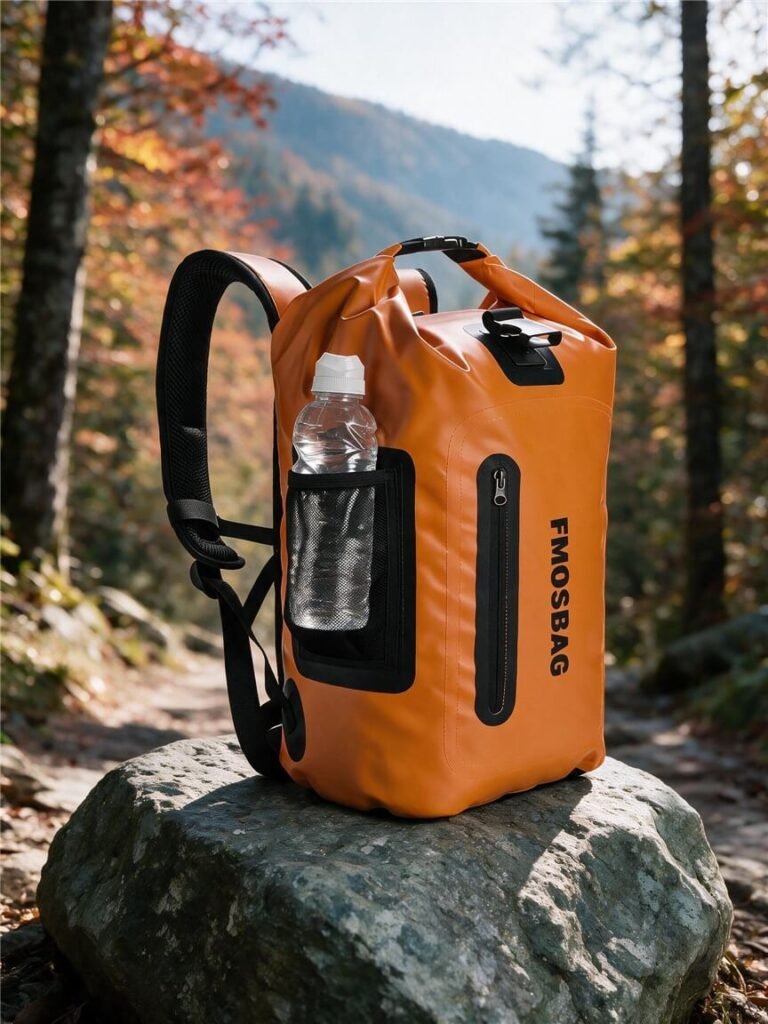
The worst moment on a camping trip? Waking up at midnight to find your sleeping bag soaked by sideways rain, your phone dead from condensation, your spare clothes drenched, and your snacks turned mushy by morning dew. Plenty of people buy a so-called “waterproof bag” only to watch it leak when it matters most. As the saying goes, nothing is more heartbreaking than that. So the real question is: did you buy the wrong type of bag in the first place?
Our factory has specialized in OEM waterproof outdoor bags since 2014, serving dozens of outdoor brands worldwide. Drawing on real-world end-user scenarios, this guide explains exactly what a dry bag is, which situations demand one, where you can skip it, and how to choose without making costly mistakes. It is built for brand buyers who want to understand product logic and build high-rated product lines.
1. What Is a Camping Dry Bag? How Is It Different from a Regular Waterproof Bag?
1.1 Definition and Core Construction
A dry bag is a waterproof storage container that uses a roll-top closure combined with heat-welded seams. It is designed to keep contents dry even during short-term submersion, not just splashing rain.
Its core construction has three parts:
- Waterproof fabric: PVC tarpaulin, TPU-laminated nylon, coated polyester, etc.
- Roll-top closure system: the top is rolled 3–5 times and clipped shut, creating a physical waterproof barrier.
- Heat-welded seams: replaces traditional stitching and eliminates needle-hole leakage.
1.2 Understanding IPX Waterproof Ratings
Many bags labeled “waterproof” are actually only water-resistant. This expectation gap is the number one driver of bad reviews. Always check the IPX rating:
| IPX Rating | Protection Level | Best For |
|---|---|---|
| IPX4 | Splash-proof; handles light rain and water spray | Daily commuting, clear-weather camping |
| IPX6 | Resists powerful water jets; handles heavy rain | Rainy-region camping, hiking |
| IPX7 | Submersible up to 1 metre for 30 minutes | Kayaking, rafting, accidental water entry |
| IPX8 | Continuous submersion at specified depth | Diving, marine rescue and other professional uses |
Most everyday camping dry bags fall between IPX6 and IPX7. If your trip involves deep water crossings or water sports, confirm an IPX7+ rating, or double up with two bags for extra safety.
1.3 How to Seal a Dry Bag Properly (5 Steps)
Even the best fabric leaks if sealed incorrectly. Here is the right roll-top method:
- Pack your gear: ideally only dry items; keep wet and dry separate; wrap sharp objects individually.
- Remove excess air: press the bag gently to push out air (leave some air in if you want it to float).
- Roll at least 3 times: roll the top tightly, more rolls mean a better seal; keep edges flat and wrinkle-free.
- Clip the ends together: bring the two ends of the rolled top together and fasten the buckle, forming a handle or anchor point.
- Squeeze test: gently press the bag. If air escapes, the seal is not tight enough — unroll and redo it.
2. Do You Actually Need a Dry Bag for Camping?
Verdict: You do not strictly need a specialized dry bag for every camping trip, but you do need a reliable way to protect critical gear like your sleeping bag and spare clothes. On clear-weather car camping trips, regular storage bags are fine. For backpacking, rainy forecasts, or water sports, a dry bag is non-negotiable.
2.1 Scenarios Where a Dry Bag Is Essential
① Water-sports camping
Kayaking, canoeing, rafting and paddleboarding mean gear can fall in the water or get soaked by spray at any time. An IPX7+ dry bag protects your phone, clothes and sleeping bag — it is simply non-negotiable for water activities.
② Protecting sleep gear (a safety issue)
A wet sleeping bag or insulation layer can lead to hypothermia in cold conditions. This is not a comfort issue — it is a safety issue. Especially at high altitude or in autumn/winter camping, your sleeping bag must stay dry.
③ Multi-day hiking / backpacking
Most backpacks are not fully waterproof, so a dry bag is the last line of defence for your gear. It also doubles as a compression sack to reduce volume and keep items organized.
④ Rainy regions / wet-season camping
In sustained rainfall, regular waterproof bags and rain covers cannot guarantee dry contents. The structural waterproofing of a dry bag is far more reliable.
⑤ Bikepacking and cycle touring
Dry bags strap to handlebars or under the saddle, fully exposed to rain and tyre spray. They need full waterproof protection.
⑥ Beach days and water-based outings
Keeps spray, sand and waves away from your phone, towel and dry change of clothes.
2.2 Scenarios Where You Can Skip a Specialized Dry Bag
- Single-day clear-weather casual camping: no rain risk, regular storage bags work.
- You already own a fully waterproof backpack plus a rain cover: contents have basic protection.
- Extremely budget-conscious beginners: budget alternatives can work as a temporary solution.
2.3 In Extreme Environments, a Dry Bag Is Insurance, Not an Option
| Environment | Core Value of a Dry Bag |
|---|---|
| Alpine / snow | Blocks meltwater and slush, prevents gear from getting damp |
| Tropical / rainforest | Rain protection, high-humidity defence, stops sweat from seeping in |
| Desert | Keeps sand out of clothes, food and sleeping bags |
| Coast | Salt-spray corrosion protection, guards against wave splash |
2.4 Bonus Value: A Dry Bag Does More Than Keep Things Dry
Many people overlook the versatility of dry bags:
- Compression storage: with air squeezed out, volume can shrink by up to 80%, saving pack space.
- Wet-dry separation: store clean clothes or dirty laundry — either way, everything stays in one place and goes straight in the washing machine at home.
- Colour-coded organization: use different coloured bags for different gear categories so you never have to dump everything out in the rain.
- Flotation rescue: a properly sealed dry bag with air inside floats, making it easy to retrieve if it goes overboard.
3. Dry Bag vs Waterproof Bag vs Budget Alternatives: How to Choose
3.1 Dry Bag vs Regular Waterproof Bag
| Comparison | Regular Waterproof Bag | Professional Dry Bag |
|---|---|---|
| Waterproof rating | IPX4–IPX5, splash-resistant only | IPX6–IPX7, handles short-term submersion |
| Closure | Waterproof zipper / flap | Roll-top 3–5 rolls + buckle |
| Seam construction | Stitched + taped | Heat-welded, no needle holes |
| Flotation | May sink | Floats when properly sealed |
| Best for | Commuting, light rain, internal pack organization | Water sports, heavy rain, multi-day hiking |
| Price | Low | Mid to high |
3.2 On a Budget? These Alternatives Work in a Pinch
① Heavy-duty trash compactor / contractor bags
The classic backpacker hack — line your main pack with a heavy contractor bag and it acts as a giant, cheap waterproof liner for everything inside. Extremely low cost, surprisingly effective.
Downsides: not durable, punctures easily on sharp objects; no carry handle; awkward to access.
② Heavy-duty Ziploc freezer bags
A temporary waterproof solution for phones, wallets, documents and small electronics. Freezer-grade bags are tougher than regular ones.
Downsides: small capacity, not durable, unsuitable for larger items.
③ Backpack rain cover
Effective against light rain and splashes, but does not protect against submersion, ground puddles, or water soaking through the bottom of the pack.
Downsides: only protects the outside of the pack; contents can still get damp from condensation.
4. Key Features and Types of Quality Dry Bags
4.1 Mainstream Fabric Comparison
| Fabric | Durability | Flexibility | Waterproofing | Common Use |
|---|---|---|---|---|
| PVC Tarpaulin (500D/840D) | Very durable | Rigid | 100% waterproof | Water sports, boating, mass-market camping |
| TPU-Laminated Nylon (210D/420D) | Durable | Soft | 100% waterproof, more eco-friendly | Backpacking, lightweight premium lines |
| Coated Polyester (600D) | Moderate | Soft | Waterproof when coated | Entry-level, splash-resistant models |
| Vinyl | Very durable | Moderate | Fully waterproof | Large-capacity rugged bags |
Additional durability features found on mid-to-high-end dry bags:
- UV resistance: prevents fading and degradation from sun exposure.
- Cold resistance: stays flexible in low temperatures without becoming brittle.
- 500D+ abrasion resistance: handles rubbing against rocks and branches.
- High-pressure seams: does not delaminate under extreme conditions.
4.2 Five Main Types of Dry Bags
① Roll-Top
The classic, most reliable type with the best waterproof performance. Suitable for hiking, camping, kayaking and most other scenarios.
Pros: reliable seal, durable, reasonably priced
Cons: accessing items is slightly slower
② Zipper-Sealed
Uses airtight waterproof zippers for fast opening and closing, with multiple pockets for organization. Ideal for sailing, fishing and other activities requiring frequent access.
Pros: fast access, good organization
Cons: zippers are the weak point for waterproofing and need regular maintenance; higher price
③ Backpack Style
A fully waterproof backpack with shoulder straps and a hip belt, suitable for canyoning, wet portages and scenarios where it is your only pack.
Pros: comfortable carry, can be used standalone
Cons: heavier, more expensive
④ Compression
Features a purge valve or compression straps to squeeze out air and reduce bulk. Perfect for sleeping bags, thick jackets and other fluffy items.
Pros: saves space
Cons: over-compression can stress seams
⑤ Specialty Bags
- Faraday signal-blocking bag: waterproof + signal shielding for electronic devices.
- Wet-dry separation bag: internal divider carries dry and wet items simultaneously.
- Clear-panel bag: see inside without opening.
- Pump inflation model: bottom valve connects to an air mattress for inflation. Dry air from the bag extends mattress lifespan compared to moisture-rich breath from your mouth.
5. How to Choose the Right Size
5.1 Five Steps to Picking the Right Size
- Estimate gear volume: pile up what you need to carry, then add 5–10 litres of extra room.
- Match activity type: kayaking usually needs 30–50L; hiking typically only needs 10–30L.
- Consider item count: more items are often better split across several smaller bags than one giant one.
- Weight considerations: larger bags weigh more — important on long hikes.
- Packing method: lots of compressible items suit a compression bag; category organization favours several small bags.
5.2 Capacity Guide
| Capacity | What Fits | Best For |
|---|---|---|
| 2–5L | Phone, wallet, keys, first-aid kit, small camera | Day hikes, clipping outside a pack |
| 10L | Light jacket, gloves, hat, spare clothes | Day hikes, cycling |
| 20L | Full change of clothes or a sleeping bag | Weekend camping, bikepacking, wild swimming |
| 30L | Clothes + food + sleep system | Multi-day hiking, can work as a standalone pack |
| 40–60L | Group gear, tent, full camping kit | Expeditions, kayaking, group camping |
Market data: The 3–7L range is the best-selling capacity bracket — it is the most versatile, and most buyers end up purchasing several different sizes to use together.
6. Creative Uses for Dry Bags: Beyond Simple Storage
Dry bags are the Swiss Army knife of outdoor gear. Beyond waterproof storage, here are practical uses:
- Improvised water bucket: a 20L bag with the top loosely rolled can carry water from a stream back to camp.
- Camp sink / laundry bag: add water and biodegradable soap for washing hands, dishes or socks.
- Leak-proof quarantine: store toothpaste, olive oil and other spill-prone items to protect the rest of your pack.
- Camp pillow / sit mat: half-fill with soft clothes or a little air for a makeshift pillow or a dry seat on wet ground.
- Dry kindling bag: collect birch bark and twigs on rainy days so you always have dry fire starters.
- Wildlife-proof food bag: seals in odours better than mesh bags; hang it high in bear country.
- Open-water swim buoy: seal with air inside to use as a safety float while storing snacks and valuables.
- Medication storage: extra protection for medicine that must stay dry in humid environments.
- Rubbish bag: seals in smells and mess, making Leave No Trace easy on multi-day trips.
- Mattress pump: Pump-model dry bags have a bottom valve that inflates air mattresses with dry air, reducing internal moisture and extending mattress life.
7. Care and Maintenance: Make It Last for Years
Dry bags are tough, but proper care extends their lifespan significantly:
- Gentle cleaning: use warm water + mild soap, wipe inside and out with a soft cloth. Do not machine-wash; do not use harsh solvents.
- Dry completely before storing: even slight dampness can cause mould. Hang upside down, open, in a well-ventilated area; pay attention to corners and folds.
- Inspect before every trip: check for punctures and abrasion, especially on areas that rub against rocks or bike frames; verify the roll-top seal is intact.
- Store loosely, not rolled: once clean and dry, store unrolled in a cool, dry place away from direct sunlight and heat.
- Repair small damage promptly: depending on fabric type, small holes can be patched with specialist patches or seam tape, especially on heavier models.
8. Common Buying Mistakes
- Treating “water-resistant” as “waterproof” — splash-proof is not fully waterproof; it leaks in heavy rain.
- Looking only at capacity and ignoring fabric thickness — thin fabric punctures easily on branches and rocks.
- Overlooking seam construction — even waterproof fabric leaks through needle holes on stitched bags.
- Rolling the top fewer than 3 times — at least 3–4 tight rolls are needed for an effective seal.
- Overpacking — an overstuffed bag cannot seal properly, and waterproofing fails.
- Buying one giant bag for everything — categorized storage is more practical; several small bags beat one huge one.
- Ignoring purge-valve design — bags without a purge valve compress poorly and take up more space.
- Storing while damp — leads to mould, coating degradation and shortened lifespan.
9. OEM Customization Options
We support full-range customization to match diverse brand positioning and budgets:
- Fabric customization: PVC tarpaulin / TPU nylon / coated polyester, with adjustable waterproof ratings.
- Capacity customization: full range from 2L to 60L, matched to different camping scenarios.
- Construction customization: heat-welded or stitched-and-taped, matching different price tiers.
- Closure customization: roll-top / waterproof zipper / hybrid designs.
- Type customization: basic roll-top / backpack style / compression / specialty models (Faraday, wet-dry, Pump inflation).
- Feature customization: add or remove shoulder straps, D-rings, purge valves, clear panels and more.
- Branding options: embroidery, screen printing, heat-transfer logos; custom Pantone colour matching.
- Flexible MOQ: 100 pieces per model; 3-day sample turnaround, ideal for small-brand trial orders.
- Certifications: products meet REACH and OEKO-TEX® standards for European-market access.
Explore more waterproof outdoor bag customization solutions on our custom service page.
Final Thoughts
A dry bag is not essential for every camping scenario, but in rainy conditions, water sports and multi-day hiking, it is the most reliable way to protect your gear. Getting the fabric, construction, size and type right is what unlocks its true value.
For brand buyers, clearly stating waterproof ratings, building tiered product lines, recommending sizes by scenario, and developing differentiated feature models will effectively reduce returns, boost margins and strengthen brand reputation. If you are planning to launch a camping dry bag product line, contact us for a free product design proposal and factory quotation.
Frequently Asked Questions
