
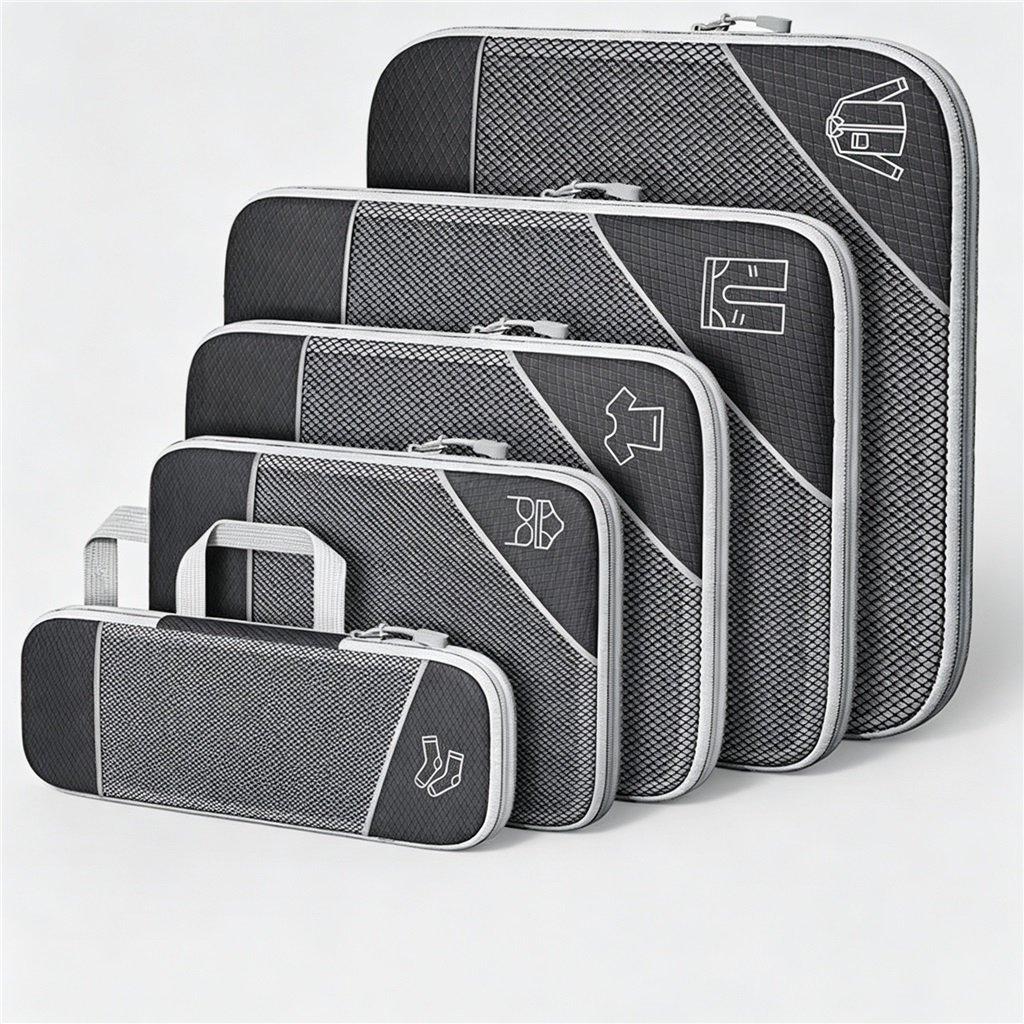
Are compression packing cubes really worth it for travel and sports? This guide explains how compression packing cubes work, how much luggage space they can save, and how to pick the best compression packing cubes in 2026. We also share a detailed comparison between compression packing cubes and standard packing cubes, real user review insights, and professional B2B custom manufacturing advice for brand wholesalers interested in custom compression packing cubes for travel.
What Are Compression Packing Cubes and How Do They Work?
If you’ve ever wrestled with an overstuffed suitcase or backpack, you’ve probably searched for the best compression packing cubes. But how do compression packing cubes actually work—and how are they different from regular packing organizers?
A compression packing cube is essentially a fabric travel packing organizer with one key addition: a secondary compression zipper. The operating mechanism is simple:
- Pack your clothes inside just like a regular packing cube.
- Zip the main compartment fully shut.
- Close the outer compression zipper; this squeezes the entire cube flat, pushes out trapped air, and compresses soft clothing items down to roughly 50–60% of their original volume.
The result is a firm, neat bundle that instantly creates extra storage space in your suitcase, carry-on luggage, backpack, or gym duffel. The core performance of compression travel cubes relies on the double-zipper system and carefully selected fabric. Most quality options use lightweight but tear-resistant materials such as ripstop nylon or high-density polyester. When browsing genuine compression packing cubes reviews, one trend is clear: the durability of the compression zipper can make or break the whole product.
Do Compression Packing Cubes Actually Save Space?
Space-saving performance is the biggest reason travelers choose compression cubes. By squeezing trapped air out of clothing, compression packing cubes cut down bulk, letting you fit more belongings into limited carry-on luggage space.
Most end users achieve a 30–50% volume reduction for soft garments. The exact space you save varies based on fabric thickness, packing technique, and the design of your compression packing cubes for travel. It’s important to understand: compression packing cubes reduce volume, they do not lower the actual weight of your luggage. They only help you organize items to avoid bulky, uneven packing distribution. If you often fly, keep in mind IATA carry-on luggage size regulations when selecting cube dimensions.
Core Benefits of Compression Packing Cubes
Let’s skip over exaggerated marketing claims. Below are the advantages valued by frequent travelers, gym-goers and outdoor enthusiasts, repeatedly mentioned across lists of the best compression packing cubes:
1. Gain 30–50% Extra Luggage Space
This remains the top benefit. If you are shopping for the best compression packing cubes for travel, space efficiency will always be your primary consideration.
2. Keep Travel Items Organized Anywhere
Stop rummaging through messy piles of clothes. Separate gym apparel, daily streetwear, cables and accessories into individual cubes. Compression packing cubes function like portable drawers, a huge upgrade for athletes and sports teams traveling to tournaments.
3. Help Reduce Clothing Wrinkling
It sounds counterintuitive, but compression limits fabric sliding inside luggage and keeps clothes held flat. Roll garments before placing them inside compression cubes, and many items will be wearable right after unpacking.
4. Simple Separation for Clean and Damp Items
Many of the best compression packing cubes 2026 feature waterproof or antimicrobial lining. You can safely store sweaty gym wear or damp swimsuits in one cube without contaminating the rest of your luggage, a top-loved feature according to compression packing cubes reviews.
5. Fast Unpacking and Repacking
You can lift entire cubes directly into hotel drawers instead of emptying your whole suitcase. Repacking is equally quick—stack the compression travel cubes back into your luggage and you are ready to go.
Potential Downsides of Compression Packing Cubes
While compression cubes deliver clear travel advantages, they also have limitations you need to consider before buying or bulk sourcing:
- Over-compressing delicate fabrics such as silk may create permanent wrinkles.
- Low-cost thin materials and poor-quality zippers easily fail under compression pressure.
- Cheaper models often suffer gradual air leakage over repeated trips, losing compression performance.
- Oversized compression cubes may not fit standard carry-on luggage dimensions.
Compression Packing Cubes vs. Standard Packing Cubes: At a Glance
The table below highlights the key differences between standard packing cubes and compression packing cubes for travel and wholesale sourcing:
| Feature | Standard Packing Cube | Compression Packing Cube |
|---|---|---|
| Space Saving | Minimal—only for organization | Up to 50–60% volume reduction |
| Organization | Yes | Yes, forms firmer, neater bundles |
| Wrinkle Control | Moderate | Better—clothes are held tightly in place |
| Dry/Wet Separation | Possible only with coated fabric | Many built-in with waterproof lining |
| Best For | Leisure travelers prioritizing quick access | Travelers & athletes pursuing maximum space efficiency |
| B2B Client Type | Hospitality, basic corporate gifts | Sports brands, outdoor gear retailers, fitness accessory lines |
Who Should Use Compression Packing Cubes?
Compression packing cubes fit two major groups:
- Individual users: Frequent leisure travelers, gym enthusiasts, sports athletes, and anyone traveling with limited carry-on luggage space.
- Business buyers: Sports brands, travel accessory sellers, corporate gift distributors looking for wholesale travel organizers to add to their product catalogs.
Key Factors To Consider When Choosing Compression Packing Cubes
If you are a consumer shopping for personal use or a brand owner ready to develop your own product line, here is what defines the best compression packing cubes in 2026:
- Fabric: Lightweight ripstop polyester fabric standards or nylon, minimum 210D thickness. Water-resistant PU coating is now a baseline standard.
- Zipper: The compression zipper bears the largest tension. Reliable YKK or equivalent self-locking zippers are non-negotiable.
- Seams: Double-stitched bound edges to prevent fabric blowouts during compression.
- Size Sets: S/M/L/XL multi-piece sets designed to fit standard carry-on suitcase limits.
- Customization options: Brand logo printing, Pantone color matching, antimicrobial linings and custom woven labels.
When shoppers search for the best compression packing cubes, they are not only looking for a simple fabric bag—they prioritize long-term durability. Consistent product quality depends entirely on manufacturing standards.
Real User Feedback: Pros & Complaints of Compression Packing Cubes
We analyzed hundreds of genuine compression packing cubes reviews and sorted common user feedback:
| What Users Love | Common Complaints |
|---|---|
| Noticeable space gains (30–50%) | Cheap zippers that burst under pressure |
| Keeps luggage organized throughout trips | Thin fabric tearing along seams |
| Convenient separation for clean and damp clothes | Some sizes incompatible with carry-on luggage |
| Ultra-lightweight, adds negligible bag weight | Low-grade compression zippers derail quickly |
For B2B wholesale buyers, the lesson is straightforward: the difference between 5-star and 1-star customer reviews always comes down to fabric durability and zipper quality. If you plan to launch your own line, we recommend genuine YKK zippers and at minimum 210D ripstop fabric.
B2B Guide: Custom Compression Packing Cube Manufacturing & Wholesale
FMOS Bag has specialized in custom sports and travel bags since 2014. We operate directly as a manufacturer without middlemen, with in-house R&D, design and full production capacity. If you intend to launch your private-label line of wholesale compression packing cubes, our core support includes:
- Professional material selection: Tear-resistant lightweight fabrics with waterproof and antimicrobial treatments, the same materials used for top-rated compression packing cubes for travel.
- Genuine YKK zippers: The most critical component for stable compression performance.
- Full OEM & ODM customization: Adjust sizes, colors, woven labels and outer packaging to match your brand identity.
- Low minimum order quantity: Orders starting at only 100 pieces, perfect for testing new market demand.
- Fast sampling: Finished prototypes ready within 7–10 working days.
We already supply sports brands and cross-border e-commerce merchants across North America and Europe. Reach out for a custom quotation via our official website.
Looking for custom & wholesale compression packing cubes for your brand?
Final Verdict: Are Compression Packing Cubes Worth It?
For individual travelers: Compression packing cubes are absolutely worth purchasing if you often travel with carry-on luggage, play sports, or want neatly organized clothing. Choose high-quality fabric and reliable zippers to avoid common durability issues.
For wholesale brand owners: Custom compression packing cubes remain a high-demand travel accessory. With proper material and craftsmanship control, they deliver consistent customer satisfaction and strong market competitiveness.
Frequently Asked Questions
Q1: Are compression cubes good for packing?
A: Compression cubes optimize packing space with the dual zipper compression mechanism, ideal for consolidating bulky clothing during travel. They work best for casual and sportswear; take extra care with easily wrinkled delicate fabrics.
Q2: Do compression packing cubes reduce weight?
A: Compression packing cubes cannot reduce the actual weight of your clothes. However, they eliminate uneven bulky piles inside luggage, helping you manage weight distribution and avoid wasted suitcase space.
Q3: Is it better to roll or fold clothes inside compression cubes?
A: Both methods work well. Many travelers prefer rolling garments to cut down wrinkles, while folding delivers slightly higher compression levels. You can test both ways based on your clothing types.
Q4: Do clothes get wrinkled in compression packing cubes?
A: Some wrinkling may appear on delicate materials. Rolling clothes before packing helps minimize creases. A handy travel trick: hang wrinkled clothes on the bathroom door during a hot shower; steam will naturally smooth fabric wrinkles.
Q5: How much space do compression packing cubes actually save?
A: Most users achieve a 30–50% volume reduction on soft garments. The exact result depends on fabric material and how you pack your items, widely verified in compression packing cubes reviews.
Q6: Can you add a waterproof lining for wet or sweaty items in custom orders?
A: Absolutely. We can integrate TPU or PU-coated moisture-resistant lining to separate damp sportswear, a highly popular feature for gym, swim and outdoor brands looking for OEM compression packing cubes.
Q7: What is your MOQ for custom compression packing cubes?
A: We accept small-batch custom orders starting at 100 pieces per design. Pre-production samples are available before you confirm bulk manufacturing.
Q8: Can FMOSBAG match our brand colors and print custom logos?
A: Yes. We offer Pantone color matching, screen printing, embroidery and custom woven labels, to keep your brand style consistent across all travel packing accessories.
