
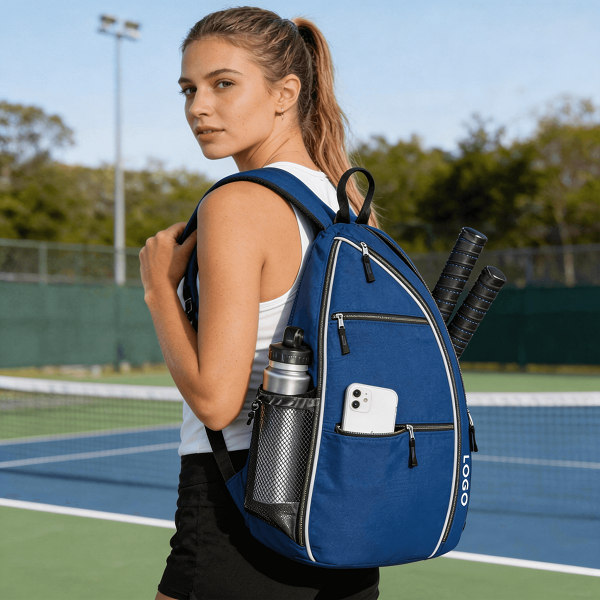
The global pickleball boom is no longer a trend—it’s a dominant sports lifestyle market. In 2025, the global pickleball equipment market reached $485.42 million, with bag and accessory segments growing at an 11.2% CAGR, one of the fastest-growing categories in the entire industry.
With low entry barriers, hundreds of new startup brands, local clubs, and influencer lines are launching custom pickleball bags every month. But here’s the factory truth most new sellers never realize:
Over 68% of new custom pickleball bag lines fail within 12 months. Not because of bad designs, but because of over-engineering.
New brands stack unnecessary layers, oversized structures, and premium materials they don’t need. This raises production costs by 20–35%, killing profit margins and retail competitiveness.
As a 10+ year sports bag OEM factory, we’ve worked with 70+ pickleball startups. We’ve seen the same mistake repeat: They chase “luxury materials” instead of “profitable design logic.”
You don’t need a huge budget to create premium perceived value. Below are our 4 data-backed manufacturing secrets to help new SME brands launch competitive, high-margin custom pickleball bags without over-engineering.
1. Adopt Subtraction Design: Target Exact User Groups (Cut 30% Waste Cost)
Most failed pickleball bags try to serve everyone. A universal design always results in higher material waste, larger packaging sizes, and higher shipping fees. According to sports equipment consumer trend research, niche-focused sports gear consistently outperforms multi-purpose designs in both profit margin and customer retention.
Start by defining your core user’s daily habits
Before adding any feature, answer these 5 questions to avoid building functions no one will pay for:
- How many paddles does your core user carry per session?
- Do they pack water, snacks and a change of clothes, or just basics?
- Do they need secure pockets for wallets, phones and keys?
- Will the bag be used in rain or placed on wet court ground?
- Do they walk long distances to the court, or drive and park nearby?
The answers directly determine which compartments are necessary and which are redundant. For example, a bag for drivers does not need premium padded shoulder straps; a bag for walking commuters does. Narrowing use cases eliminates 30% of unnecessary structural cost on average.
| User Group | Market Share | Gear Demand | Suggested Bag Style |
|---|---|---|---|
| Weekend Recreational Players | 72% | 2 paddles + water bottle + small accessories | Sling Bag |
| Tournament Pro Players | 18% | 4–6 paddles, apparel, towels, shoes | Large Backpack / Duffel Bag |
| Sports Club & Corporate Custom Orders | 10% | Lightweight, uniform appearance | Sling Bag / Tote Bag |
2. Add Low-Cost Micro-Features to Boost Retail Margin (Cost +5% | Value +30%)
Premium pricing does not come from thicker fabric. It comes from pain-point solving details. Industrial gear design studies prove that functional micro-upgrades greatly improve product review scores and repurchase rates.
User research shows that disorganized gear is the #1 complaint about cheap pickleball bags. Players hate dumping out the entire bag just to find a single overgrip. A few targeted dividers and dedicated pockets solve this frustration — and they cost far less than upgrading the outer fabric.
| Micro Feature | Extra Unit Cost | Core User Benefit | Competitive Advantage |
|---|---|---|---|
| Hidden Fence Hook | $0.03–$0.05 | Avoid placing bags on dirty court ground | Most generic stock bags lack this design |
| Dual-Side Reversible Shoulder Strap | $0.04–$0.06 | Fits left-handed & right-handed players | Ergonomic upgrade over basic single-strap designs |
| Ventilated Independent Shoe Compartment | $0.05–$0.08 | Prevent sweaty shoes contaminating clean clothes | Reduces negative product reviews significantly |
| Dedicated Padded Ball Pocket | $0.06–$0.09 | Stops balls from rolling around and getting lost | Solves a top daily frustration for regular players |
| Small Insulated Drink Pouch | $0.07–$0.10 | Keeps water cool during outdoor matches | Easy to market as a premium lifestyle upgrade |
| Rubber Bottom Feet / Firm Base | $0.05–$0.07 | Keeps bag upright and clean on wet/dirty ground | Greatly extends bag lifespan with minimal cost |
| Secure Inner Pocket for Valuables | $0.02–$0.04 | Safe storage for phones, keys, wallets and medicine | Almost zero cost, yet users consistently mention it in reviews |
For brands, this means you can raise your retail price by 15–25% just by optimizing the internal layout, with less than 8% added production cost.
3. Smart Material Layering: Spend Budget Only Where It Matters
Many new brands blindly upgrade to 840D TPU or heavy premium fabrics, which increases cost without improving real performance. As documented in industrial textile performance testing data, fabric thickness does not equal durability for lifestyle sports bags.
| Material Option | Cost Level | Durability | Best Use Case |
|---|---|---|---|
| 900D Ripstop Polyester | Medium | Excellent | Standard outer fabric for OEM custom pickleball bags |
| 840D TPU Coated Fabric | High | Very Good | Ultra-premium limited lines; unnecessary for startup brands |
| Thick EPE Foam + Felt Lining | Low-medium | Excellent protection | Interior padding (highest ROI upgrade) |
Reinforce high-wear areas instead of upgrading full fabric
You don’t need 840D TPU across the entire bag to make it durable. Most wear happens at 3 specific points: the bottom base, strap attachments and zipper seams.
Our factory cost-optimized formula:
- Main body: Standard 900D ripstop polyester — proven to last 2–3 seasons for regular use
- Bottom panel: Add a thin wear-resistant PVC base or rubber feet — costs 1/10 of full fabric upgrade, but doubles lifespan
- Stress points: Double-stitching at strap and handle attachments — already included in our standard production process, no extra charge
Targeted reinforcement delivers better durability returns than full heavy-fabric upgrades. It also keeps the bag lightweight, which is another strong selling point for casual players.
4. Smart Customization: Choose the Right Branding Method for Your Scenario
Big embroidery logos look cheap and outdated on modern pickleball lifestyle products. Personalization is one of the fastest-growing trends in the market — according to USA Pickleball, over 13.6 million active players are looking for ways to make their gear stand out, and solve the real problem of dozens of identical black backpacks piling up at tournament check-in.
The right customization method depends on your target scenario. There is no one-size-fits-all best option.
| Customization Method | Durability | Unit Cost Add (Bulk) | Best For | Factory Tip |
|---|---|---|---|---|
| Embroidery | Permanent (outlasts the bag) | $1.20–$3.50 | Club logos, player monograms, premium retail lines | Only use on structured fabric panels; padded compartments need special backing to avoid puckering |
| Sew-on Patches | High (3+ years) | $0.80–$2.00 | Seasonal team branding, tournament events | More flexible than direct embroidery; ideal for brands that update designs yearly |
| Iron-on Patches | Medium (1–3 years) | $0.30–$0.90 | Budget events, short-term promotions | Not recommended for premium lines; heat and moisture cause peeling over time |
| Custom Bag Tags | High (swappable) | $0.50–$1.80 | Corporate gifts, player names, tournament giveaways | Zero modification to the bag itself; lowest-risk upsell for new brands |
Team & Corporate Customization: High-Margin Bulk Order Scenarios
Personalization isn’t just for retail individual sales. Two of the highest-margin bulk order segments are team league orders and corporate event gifts.
- Club & tournament teams: 8–20 person team orders are extremely common. Most clubs want matching bags with the team logo plus individual player names/numbers. We recommend sew-on patches for the team logo + printed bag tags for player names — this keeps costs reasonable while delivering a cohesive professional look.
- Corporate pickleball events: As pickleball grows as a team-building activity, custom bags have become a premium corporate gift. Low-key branding (small embroidered logo + custom name tag) performs far better than giant company logos — recipients actually use the bag, instead of storing it away.
Final Factory Advice for New Pickleball Bag Brands
The fastest way to fail in the booming pickleball market is over-engineering. The best way to win is targeted design, smart cost allocation, and user-centric micro-features.
At FMOSBAG, we specialize in low-MOQ custom pickleball bag development for SME brands, content creators, and local sports clubs. We don’t just manufacture bags—we help you design profitable market-ready products based on real player data and 10+ years of export production experience.
If you are planning your first custom pickleball bag line or upgrading your current collection, contact our team for a free design consultation and factory cost breakdown.
Frequently Asked Questions
