
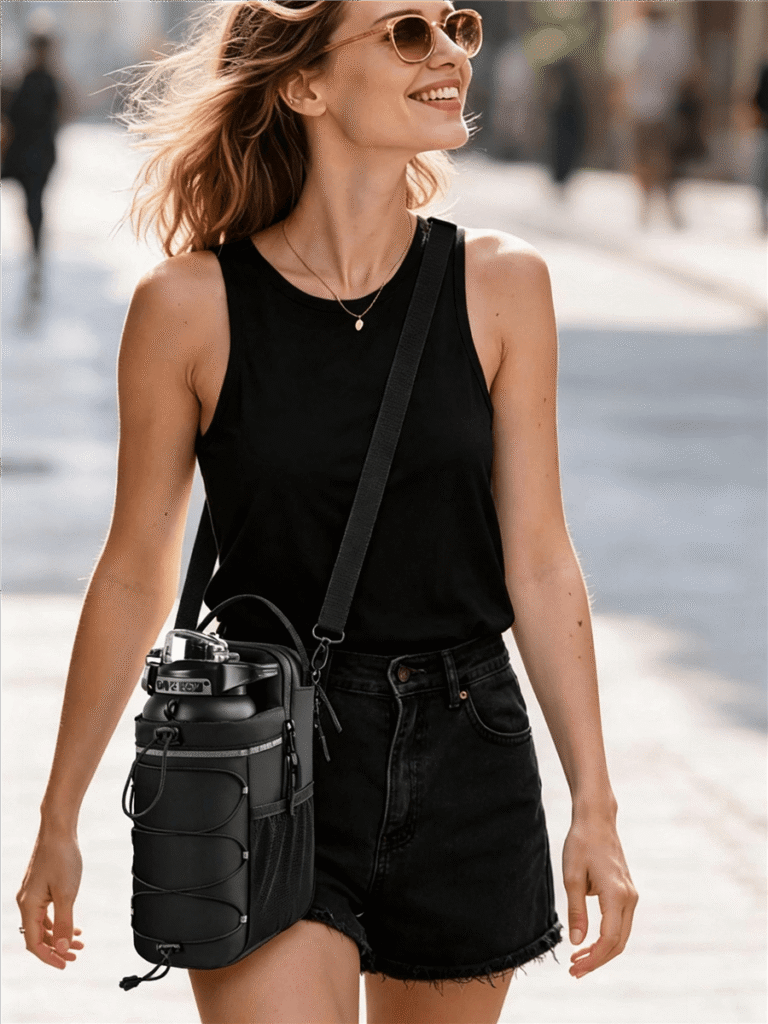
Imagine this: you’re sourcing a custom magnetic water bottle holder for your brand. You’ve reviewed samples fitted with N35 neodymium magnets and alternatives built with N52 magnets. Quotes for N52 options come slightly higher, leaving you questioning: Are N52 magnets worth the extra cost for magnetic water bottle holders?
This is a common dilemma every brand product manager meets while developing a magnetic drink holder. Magnet grade directly determines long-term product performance. If the magnet loses holding strength, the entire pouch fails. Once your product malfunctions, negative reviews and damaged brand trust follow. This makes magnet selection for magnetic water bottle holders far more critical than most OEM buyers realize.
We have manufactured custom sports bags and magnetic storage accessories for global brands since 2014. Magnetic water bottle holders have grown rapidly in demand over recent years, and we have produced thousands of units across various specs. We know which magnet setups perform reliably and which lead to after-sales trouble. To deliver definitive sourcing advice for our partners, we launched a 12-month field test, comparing N35 vs N52 magnets under three real operating environments: auto workshop, commercial gym and outdoor coastal exposure.
This guide turns our raw test data into actionable development advice for your next magnetic water bottle holder launch.
One Component Decides Your Magnetic Water Bottle Holder’s Long-Term Reputation
A magnetic water bottle holder looks simple: a fabric sleeve, a few magnets sewn in, done. But the long-term performance of those neodymium magnets is what determines whether your customer reorders or returns.
Picture the real-world use case. A mechanic clips your heavy-duty magnetic bottle pouch onto a toolbox at 7 AM, then puts in a 10-hour shift. Power tools are vibrating. The workshop temperature swings from cold mornings to hot afternoons. A coworker bumps past. The next morning, that holder needs to grip just as tight.
If the magnet loses 20% of its strength within six months, the mechanic might not notice right away. But the day that bottle crashes onto a concrete floor — that’s the moment your brand loses trust.
Returns are expensive. Negative reviews stick around forever. In B2B, one quality issue can cost you an entire retail channel. Choosing the right magnet grade for your bottle holder isn’t a technical footnote — it’s a brand protection strategy.
What Are N35 and N52 Neodymium Magnets?
N35 and N52 belong to the family of neodymium rare earth magnet grades, the most widely used high-strength permanent magnets on the market. The numbers represent the maximum energy product rating that defines magnet strength. Many buyers new to magnetic accessories often ask: what is an N52 magnet, and how does it differ from an N35 magnet?
Simply put, an N52 neodymium magnet delivers far higher magnet strength than an N35 magnet of identical physical size. This core distinction changes everything when designing custom magnetic water bottle holders for gym, workshop and outdoor use.
Core Differences Between N35 and N52 Magnets
The most obvious difference between N35 vs N52 magnets lies in raw pull force and long-term stability. N52 magnets provide stronger initial holding power, while N35 magnets come with a lower material cost. However, strength is not the only variable OEM developers need to evaluate. Demagnetization risk, environmental resistance and service lifespan all impact suitability for magnetic bottle pouches.
N35 vs N52: Pull Force & Holding Strength 12-Month Test Results
We tested two magnetic water bottle holder samples. One fitted with N35 magnets, one with N52 magnets. Same 600D polyester fabric. Same stitching process. Same overall design. The only variable was the magnet grade.
Each sample was placed in three environments:
- Workshop: Attached to a steel toolbox in an auto repair shop. Exposed to oil mist, metal dust, and occasional bumps from tools and equipment.
- Gym: Attached to weight machines in a commercial gym. Sweat exposure during peak hours (humidity 70%+), dry overnight.
- Outdoor: Attached to an exposed metal railing on the southeast coast of China. UV radiation, rain, humidity above 80%, temperatures ranging from 0°C to 38°C.
Each magnetic bottle holder bag carried a standard 750ml stainless steel water bottle, filled to capacity, weighing approximately 1.1 kg total. We measured the pull force required to detach the holder from the metal surface at the start, then again at months 3, 6, 9, and 12.
| Time Point | N35 Pull Force | N52 Pull Force | N35 Retention | N52 Retention |
|---|---|---|---|---|
| Month 0 (New) | 8.2 kg | 12.6 kg | 100% | 100% |
| Month 3 | 8.1 kg | 12.5 kg | 99% | 99% |
| Month 6 | 7.8 kg | 12.4 kg | 95% | 98% |
| Month 9 | 7.2 kg | 12.2 kg | 88% | 97% |
| Month 12 | 6.5 kg | 12.0 kg | 79% | 95% |
This pull force tracking clearly shows the performance gap between N35 and N52 neodymium magnets used inside magnetic water bottle holders, consistent with industry research about magnet pull force and demagnetization.
Long-Term Durability: Magnet Aging of N35 vs N52
Many product developers overlook gradual magnet aging. Over months of vibration, temperature swings and humidity, both grades will slowly lose minor magnet strength. Our 12-month test quantified this gap for magnetic bottle pouch applications.
N52 magnets maintained 95% of original pull force after one year. N35 magnets dropped to only 79% initial strength. While no bottles fell off during testing, the safety margin shrinks significantly for long-term commercial use, especially for heavier 750ml+ drink containers.
N35 and N52 Magnets for Magnetic Water Bottle Holders: Suitable Scenarios
Neither magnet grade works universally for all magnetic bottle pouch projects. The choice ties directly to your target bottle weight and brand positioning:
- N35 magnets: Ideal for budget entry-line products designed for bottles under 500ml, indoor dry environments such as home gyms.
- N52 neodymium magnets: Built for premium, heavy-duty applications, 500ml–1L water bottles, workshop, outdoor and high-humidity gym settings.
Cost Trade-off: Is N52 Magnet Worth The Extra Expense?
The price difference between N35 vs N52 magnets is the biggest hesitation for brand buyers. N52 magnets add roughly a few RMB per unit at wholesale magnetic water bottle holder quantities. For a product that retails at $15–25, that’s about 3–7% of the wholesale cost.
For a premium brand, the durability gain is absolutely worth it. For a strictly budget product line with lightweight bottles, N35 paired with proper coating works functionally.
Magnet Coating: Rust Risk for Magnetic Bottle Pouches
Our test revealed that rust is a more common magnetic water bottle holder failure point than magnet strength loss.
| Coating Type | 12-Month Result | Recommendation |
|---|---|---|
| Nickel-plated (industry default) | Small rust spots appeared on outdoor sample by month 6; workshop sample by month 9 | Dry indoor use only |
| Epoxy-coated | Zero rust across all three environments after 12 months | Recommended for all conditions |
| Uncoated | Significant rust by month 3 outdoors; test discontinued | Never use |
Nickel-plated is what most magnetic bottle holder suppliers quote by default. For a dry indoor gym, it’s fine. For a workshop or outdoor setting, it’s a risk. If your target market includes outdoor, workshop, or humid environments, always specify epoxy-coated neodymium magnets, as documented in tests on neodymium magnet coating corrosion resistance.
Is Fabric The Weakest Link In Magnetic Water Bottle Holders?
We tracked magnetic water bottle holder fabric aging across all three environments over 12 months. All samples used 600D polyester with PU backing — the most common spec in this category.
| Environment | Fabric Condition at 12 Months | Stitching |
|---|---|---|
| Workshop | Minor oil staining; structure fully intact | Solid |
| Gym | No visible change | Solid |
| Outdoor | Slight UV fading; structure fully intact | Solid |
No tears, no seam failures, no PU delamination. The fabric outperformed the N35 magnets. Don’t over-invest in fabric upgrades for this category unless your brand positioning specifically demands it. Put your QC focus on magnet grade and coating.
How To Pick The Right Magnet Grade For Your Custom Magnetic Water Bottle Holder
Based on 12 months of real-world testing, use this simple guideline for your OEM project:
- Budget / Entry-level, bottles under 500ml: N35 magnet + epoxy coating
- Mid-range, 500ml–750ml bottles: Choose N35 for cost savings, or upgrade to N52 magnet as a premium selling feature
- Premium / Pro-grade, 750ml–1L bottles: Spec N52 neodymium magnets with epoxy coating as standard
FAQ: Magnet Grade Questions From OEM Brand Managers
Q: What is the main difference between N35 and N52 magnets?
A: N52 magnets are much stronger than N35 magnets with identical dimensions. N35 costs less and works for light-load magnetic water bottle holders under 500ml. N52 delivers higher magnet strength to safely hold heavier bottles in workshop, gym and outdoor conditions.
Q: Are N52 magnets always better than N35 for magnetic bottle pouches?
A: N52 is not universally better. If you develop a budget line for small bottles and indoor use, properly coated N35 magnets remain cost-effective. Upgrading to N52 only adds value when you need extra safety margin for heavier loads.
Q: Which magnet lasts longer, N35 or N52?
A: With matching coating quality, both can serve for years. Our test shows N35 suffers more significant magnet aging over 12 months under continuous vibration. N52 retains holding force far better in long-term commercial use.
Q: Can cold weather reduce the magnet strength of N35 and N52 neodymium magnets?
A: Neodymium magnets maintain stable pull force between -40°C and 80°C. Low temperatures do not weaken magnet strength. Cold-related issues mainly affect fabric flexibility instead of magnetic performance.
Q: Will neodymium magnets scratch metal mounting surfaces on gym equipment or toolboxes?
A: Unprotected magnets can mark powder-coated and painted steel. We recommend adding silicone, felt or TPU backing on the magnet side of your magnetic water bottle holder. The extra layer also improves friction and stabilizes grip.
Q: How can I verify true magnet strength before mass production?
A: Ask your manufacturer to provide calibrated pull force test reports for samples. If a supplier cannot offer formal test data for N35 or N52 magnets, this is a major red flag for quality control.
Conclusion: Build Magnetic Bottle Holders That Outlast Their Warranty
After 12 months of real-world testing in a workshop, gym, and outdoor setting:
- N52 neodymium magnets with epoxy coating show virtually no degradation. The magnets will likely outlast the fabric of magnetic water bottle holders.
- N35 magnets work for lighter loads but lose noticeable magnet strength over time. A viable budget option, but only for specific use cases.
- Rust on magnet coating is a more common failure point than strength loss. Always specify epoxy coating for humid or outdoor environments.
- 600D polyester fabric and quality stitching are not the limiting factor. Focus your quality control attention on magnet specifications.
For any brand launching a custom magnetic water bottle holder, the three product decisions that matter most are magnet grade, magnet coating, and surface protection. Get those right, and you’ll have a product that genuinely stands the test of time — and customers who come back for more.
Looking for durable custom magnetic water bottle holders built with stable magnet specs?
FMOSBAG manufactures custom magnetic water bottle holders with N52 magnets and epoxy-coated hardware as standard options. We have developed soft accessories for global brands since 2014 and run real-environment durability testing — because your brand reputation matters to us.
Request a Free Quote Browse Magnetic Collection
